 Canadian Machines
The first Canada Investment Summit took place in Toronto on September 14 and 15. The federal government, CPP Investments and PSP Investments brought together investors to discuss Canadian projects across energy, infrastructure, technology and manufacturing.
The government's closing announcement reported nearly $500 billion in investment commitments. That figure covers a broad set of announcements and investment plans. For Canadian hardware companies, the individual proposals and financing programs give a more useful picture of what could get built.
The space projects in the prospectus
The 167-project prospectus includes satellite communications, Earth observation and launch infrastructure. SpaceQ's review identifies four space-related entries: Telesat's Lightspeed constellation, Wyvern's deployable optics, Maritime Launch Services' Spaceport Nova Scotia, and Canadian Strategic Missions Corporation's micro-modular reactor platform.
The projects vary considerably in size and purpose. SpaceQ reports a US$5.2 billion figure for Lightspeed and $250 million for Spaceport Nova Scotia. The Lightspeed proposal offers minority equity participation in Telesat or the program itself, with capacity and ground infrastructure options for sovereign investors. These figures describe the proposed projects; inclusion in the book does not establish that a financing round has closed.
Wyvern's $230 million proposal
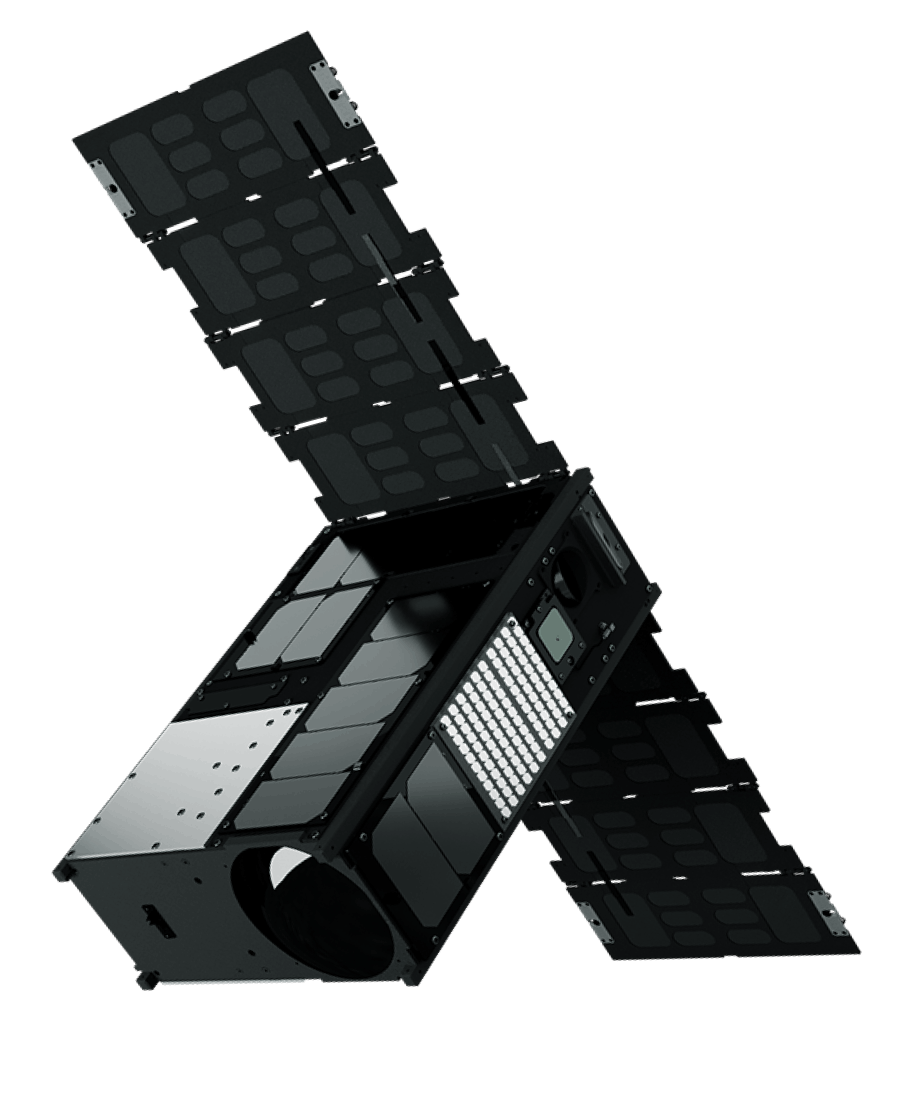
Wyvern is the entry I would spend the most time on. The Edmonton company says it is seeking C$230 million through equity, strategic partnerships and government co-investment for its deployable-optics program.
The engineering problem is straightforward: a larger telescope can resolve smaller features, but launch vehicles limit how much hardware fits inside them. Deployable optics allow a satellite to extend its optical assembly after launch. Wyvern wants to combine that architecture with hyperspectral imaging, which measures light across many spectral bands to help identify materials on the ground.
The company's proposal targets Canadian and allied intelligence, surveillance and reconnaissance. It also describes civilian applications in agriculture, wildfire monitoring and resource management. Wyvern says the planned satellites would be small enough to launch on Canadian vehicles. The funding, development and deployment work still lies ahead.
CIBC's defence financing commitment
A separate announcement that week matters to smaller companies. On September 10, CIBC committed $2 billion to financing eligible Canadian defence and dual-use businesses.
The bank also established a national network of defence-sector specialists within commercial banking. Its announcement covers structured financing, industry expertise and business connections. Eligible sectors include infrastructure, cybersecurity, digital capabilities and advanced technologies.
For a robotics company with defence customers, this creates a specific banking team to approach. The announcement leaves the practical details to be established with the bank: eligibility, loan terms, security requirements and how it will assess a company's contracts and cash flow.
We will follow which prospectus projects secure financing, what Wyvern funds first, and whether smaller suppliers use CIBC's program to buy equipment and deliver orders.